![FLOOD CDT [logo]](/themes/floodcdt-NOC8X/logo.svg)
We’re excited to announce that FLOOD-CDT has been awarded funding to offer paid Research Experience Placements (REPs) for summer 2026!
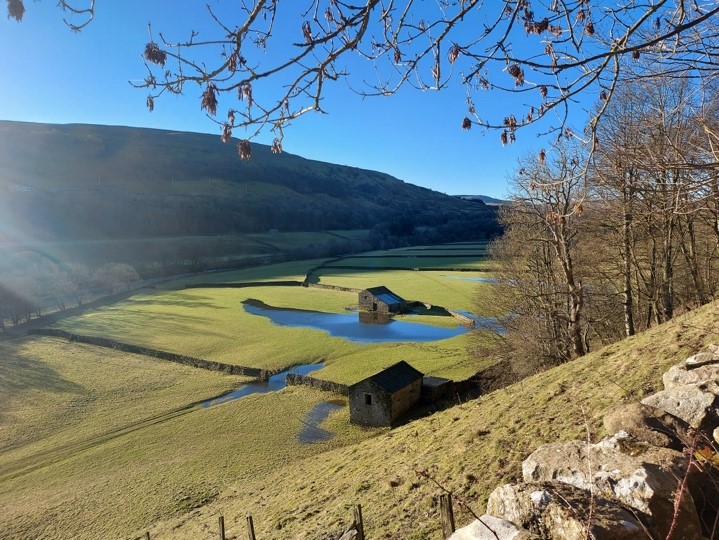
REPs are short, funded summer research projects designed to give undergraduates hands‑on experience in environmental science, real-world data and fieldwork. They are a great opportunity if you’re curious about research or considering a future PhD.
Who can apply?
Undergraduates who:
- Are studying for their first degree (including integrated Masters)
- Will not have graduated before the placement starts
- Have not previously completed a NERC REP
- Are eligible for future NERC PhD funding
- Registered at either University of Southampton, Loughborough University, Newcastle University or Bristol University – please check the project location before applying to ensure it’s feasible for you!
Students from all disciplines are welcome, and we particularly encourage applications from groups underrepresented in environmental sciences.
What you’ll gain
- A paid 8 week summer placement with a £500 cost towards research expenses
- Experience working with active research teams
- Opportunities to build skills, networks, and insight into postgraduate research
Available Projects
Title: Do standard biomonitoring indices detect invasive species impacts? A case study of the demon shrimp in UK rivers
Location: University of Southampton
Description: Invasive non-native species threaten freshwater ecosystems, yet their impacts are not always captured by conventional biomonitoring indices (Guareshi et al., 2020). Standard macroinvertebrate metrics were developed to assess pollution and general ecological status rather than biological invasions that restructure communities (Macneil et al., 2009). This project will test whether commonly used indices can detect the ecological impacts of the invasive ‘demon shrimp’ (Dikerogammarus haemobaphes) in the River Severn, a species known to alter benthic assemblages by disrupting native shredder taxa and trophic dynamics (Constable et al., 2006).
The project complements ongoing invasive-species research within the School of Geography and Environmental Sciences at the University of Southampton, supervised by Dr Victoria Dominguez Almela. Study sites include publicly accessible stretches of the invaded River Severn (Tewkesbury–Ham Bridge) and the reference River Wye (Monmouth–Chepstow), chosen for their comparable lowland, slow-flowing characteristics.
Fieldwork will involve standardised macroinvertebrate kick sampling (3‑minute kick + 1‑minute hand search) at invaded and non-invaded sites. Samples will be preserved and identified to family level, with demon-shrimp abundances recorded. Biomonitoring indices (e.g., BMWP, ASPT) and functional trait-based metrics such as Flow‑T (Laini et al., 2022) will be derived. Statistical analyses in R will compare index performance between invaded and reference sites.
The student will gain skills in field sampling, taxonomic identification, trait-based analysis, and statistical modelling in R. All necessary field and lab equipment will be provided by the University of Southampton. No intellectual property issues are anticipated.
Title: Upland flood risk: quantifying feedbacks between riverbed morphology and flooding under a changing climate
Location: Loughborough University
Description: River morphology and flood risk are complexly linked: channel morphology determines flood capacity (Slater, 2016), but morphological change is also controlled by the magnitude and frequency of floods (Fryirs, 2017). Limited understanding of channel bed response over short timescales makes it difficult to predict longer-term flood risk under a changing climate. This could be addressed by better understanding patterns of channel erosion and deposition, and their sensitivity to flood history. This Research Experience Placement will provide an excellent training opportunity to enhance a baseline dataset of channel bed response to a time series of flood events (River Alport, Peak District) to quantify linkages between channel bed morphology change and flood magnitude/frequency, and its influence on long-term river management (erosion/deposition) by: (1) Conducting detailed topographic and bathymetric surveys in the field using state-of-the-art survey methods. (2) Characterising sediment grain sizes throughout the river reach using Wolman counts (field collection) and analysis of 3D riverbed models, using Machine Learning (e.g. SegmentEveryGrain) and/or topographic segmentation (e.g. G3Point) approaches, to estimate within-channel bed mobility. (3) Performing 2D flow modelling (e.g. HEC-RAS) to estimate likelihood of bed morphology change under varying flood events. The appointed researcher will have access to existing baseline data (flow timeseries, high-resolution bed surface models), which will guide the development of their own field investigation. As well as developing a holistic understanding of mechanisms linking sediment mobility and fluvial hydraulics, this project is an opportunity to develop skills in: (a) designing and conducting field-based fluvial surveys; (b) handling and analysis of 3-dimensional geospatial data; (c) hydrological modelling and flood risk interpretation. The placement will be supervised primarily by Dr Edwin Baynes (Loughborough) and will benefit from a wider research network, including opportunities to present findings in Loughborough’s River Research Group meetings, and will engage with external collaborators involved in the wider research area (Durham University, Manchester Metropolitan University, Environment Agency).
Title: Using Geomagnetic Data to Detect Past Coastal Extreme Events in the UK
Location: National Oceanography Centre
Description: Geomagnetic data measured by land observatories (https://wdc.bgs.ac.uk/index.html), like several that go back over 100 years in the UK, can potentially be used to detect extreme (e.g., storm surge) events impinging upon the UK's coast when there were no tide gauge data nor is there a hindcast. Methods exist to extract the ocean vs ionospheric tides from geomagnetic data (Tyler and Trossman, 2024), it's known that geomagnetic signals increase synchronously with tide gauge signals (Tyler, 2021), and there are existing formulations to infer the magnetic fields associated with a tsunami (Tyler, 2005). Given the current state of the UK's tide gauge network and gap-laden history of the tide gauge record in the UK, investigating whether geomagnetic data can be used as a proxy when there is no other information available could help fill in past gaps and even support future monitoring of extreme events. David Trossman, a new senior research scientist at the National Oceanography Centre (NOC), will supervise a student at the University of Liverpool who will investigate the detectability of these extreme events using geomagnetic data by performing comparisons with the tide gauge record. The student can be provided with a loaner laptop to connect to the VPN at NOC-Liverpool and arrangements can be made for the student to be given a visitor's badge to gain access to the building. The code that results from the student's summer work shall be made open source for use by others at NOC-Liverpool who monitor extreme events. This type of summer experience is often cited by researchers in the field for how they first got a taste for becoming research scientists and will provide a rare opportunity to learn about both the ocean and geomagnetism while building statistical programming skills.
How to apply
Please submit the following:
- CV (include your Student ID)
- Cover letter containing the following (no more than 300 words):
- Which project you are applying for
- Motivation: What motivates you to apply for a Research Experience Placement? Please include specific examples of your current interests, skills and experiences (including extracurricular activities), and how these relate to your chosen project.
- Research Alignment: How do your academic or research interests align with your chosen Research Experience Placement project?
- Development Goals: What skills, experiences, or insights are you hoping to gain from undertaking a Research Experience Placement?
- EDI Questionnaire – please complete the form here: FLOOD-CDT Research Experience Placements reporting questionnaire - 2026
(Required as part of NERC’s diversity data collection)
Send your application to: floodcdt@soton.ac.uk
Deadline: Monday 20th April