
Meet our Researchers
Megan Bulpitt
Project: ‘From Hazards to Risk: Physics-Informed AI and SWOT Data for Global Flood Mapping and Socio-Economic Vulnerability’
Studying at: University of Bristol
Inka Godfrey
Project: ‘Exploring the impact of climate change on flooding and new hazards to assets of the General Lighthouse Authorities of the UK and Ireland’
Studying at: University of Southampton
Elizabeth Gregory
Project: ‘Drought Impacts on the UK Levee Network’
Studying at: Newcastle University
Jonathan Griffiths
Project: ‘Developing understanding of flood hazard from bimodal wave overtopping’
Studying at: University of Southampton
Chris Hutchings
Project: ‘Sustainable Framework for Monitoring Estuarine Water Levels’
Studying at: University of Southampton
Carrie Park
Project: ‘Stories from the shore: employing oral histories for just decision making in estuarine flood and coastal risk management’
Studying at: University of Southampton
Lucy Wolstenholme
Project: ‘Co-creating Flood-Resilient Green Spaces: Understanding Health, Access and Equity in Leicestershire Communities’
Studying at: Loughborough University
Gwen Armstrong-Bisson
Project: ‘Community flood management action: an urban v rural comparative study’’
Studying at: Newcastle University
Alejandra Ayo
Project: ‘Assessing the Eco-hydrological and Geomorphic Effects of Floodplain Restoration’
Studying at: Newcastle University
Megan Bulpitt
Project Title: ‘From Hazards to Risk: Physics-Informed AI and SWOT Data for Global Flood Mapping and Socio-Economic Vulnerability’
Studying at: University of Bristol
Based at the University of Bristol, my research explores how data from the Surface Water and Ocean Topography (SWOT) satellite mission can be used to improve our understanding of flood risk through machine learning and physics-informed AI. Before starting my PhD, I worked as a Catastrophe Risk Analyst at Gallagher Re in London, where I gained experience in flood model calibration, validation and climate risk analytics, helping to translate flood hazard information into risk insights to support reinsurance decision-making. Originally from Leeds, I completed a BSc in Geography at the University of Bristol, where my dissertation investigated the impacts of climate change on future pluvial flooding. My research interests lie in flood risk, remote sensing and climate change, with a particular focus on developing new ways to understand and model flooding in a changing climate
Inka Godfrey
Project Title: ‘Exploring the impact of climate change on flooding and new hazards to assets of the General Lighthouse Authorities of the UK and Ireland’
Studying at: University of Southampton
I studied Geophysics/Oceanography (BSc) at the University of Hamburg (Germany) and continued my MSc in Geophysics there. During my MSc, I interned at a local geophysics company, helping model subsurface structures. My first job after uni brought me to the south coast of the UK. I worked as a Marine Surveyor on unexploded ordnance (UXO) surveys for dredging projects, collecting data to map potential targets and reduce risks to assets and workforce. I then worked as a Geophysical Data Analyst, mapping subsurface structures and utilities for construction contractors.
After this, I moved to Higher Education as a Learning Support Tutor at the University of Portsmouth, teaching Maths, Physics and MATLAB to technology students. While there, I studied for a PGCert in Higher Education and taught foundation Maths as a Teaching Fellow in the School of Electrical and Mechanical Engineering.
I was keen to return to research, combining my experience to analyse flood risks to lighthouses and help support safe navigation in a changing climate. Outside of research, I enjoy spending time with my family, being outdoors, reading and cooking.
Elizabeth Gregory
Project Title: ‘Drought Impacts on the UK Levee Network’
Studying at: Newcastle University
Hi, I’m Lizzie, from Teesside in the North East of England, and my route into a PhD has been a winding one. I graduated with a degree in Maths & Economics in 2013, then spent several years working in finance within the NHS. After a career break spent travelling, I decided engineering was for me and retrained, completing an MEng in Civil Engineering in 2026. My research explores the impact of drought on the UK’s levee network. Flood defences are usually discussed in terms of too much water, but prolonged dry spells can also stress earthen embankments, potentially weakening them just before heavy rain returns. Drawing on my geotechnical engineering specialism, I’m looking at how these assets cope with swings between extremes, which feels increasingly timely after two dry summers across England. I’m particularly interested in climate resilience, and I hope my work will help inform better ways of managing our flood defences.
Outside of uni, you’ll find me surfing in the cold waters of the North Sea, usually somewhere between standing on the board and being pummelled by the waves. On dry land, I love hiking and getting outdoors whenever I can, and I also enjoy reading and cooking.
Jonathan Griffiths
Project Title: ‘Developing understanding of flood hazard from bimodal wave overtopping’
Studying at: University of Southampton
As a Coastal Scientist at Coastal Partners, I work on managing flood and coastal erosion risk across areas of Hampshire and West Sussex, with my role covering coastal engineering, beach management, monitoring and research.
I'm excited to be undertaking a part-time PhD alongside my role at Coastal Partners. My research will explore how bimodal wave conditions affect gravel beaches, including sites such as Hayling island, Hurst Spit and Chesil Beach.
Outside of work and research, I love outdoor swimming, adventures with my Labrador, and growing veg on our allotment.
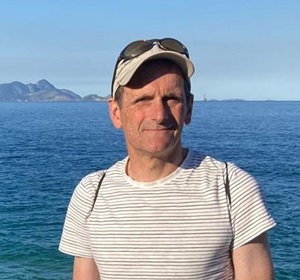
Chris Hutchings
Project Title: ‘Sustainable Framework for Monitoring Estuarine Water Levels’
Studying at: University of Southampton
I'm Chris Hutchings, returning to Southampton forty years after completing an MSc in Oceanography here. Since then, I've had a varied career, consulting in various industries, but all with the common thread of water. In my early years I worked inthe water industry, developing and applying numerical models to simulate flows and water quality in sewers, rivers and at the coast. Later, this expanded to cover metocean data collection and modelling for the offshore oil and gas industry and global ports and harbours design projects. Most recently I've been helping to assess risks and determine mitigations for shipping and navigation challenges involved with new offshore developments, such as wind farms and ongoing and expanding operations in ports and coastal areas.
With help from machine learning, I'm hoping to help find ways to use the recently launched Surface Water and Ocean Topography (SWOT) satellite to provide robust, reliable and regular measurements of estuarine water levels to aid in flood risk assessment and forecasting. When I'm not working with water, I'm often immersed in it, swimming, trying to surf, kayaking or riding round muddy fields in the winter on an inappropriate bike (aka cyclocross racing)
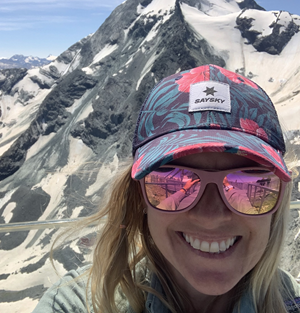
Carrie Park
Project Title: ‘Stories from the shore: employing oral histories for just decision making in estuarine flood and coastal risk management’
Studying at: University of Southampton
Hi, my name is Carrie. I grew up on the edges of wild and wet Dartmoor, England. I enjoy getting outdoors walking with my family, exploring historic ruins, surfing Cornish waves, paddleboarding on local waterways and looking after our cider orchard. I am particularly interested in how heritage and culture can help communities create climate solutions. I have a BSc in Archaeology, MA in Heritage Interpretation and MSc in Sustainable Environmental Management. The last twenty years’ I have been working within the environmental sector in stakeholder engagement, environmental research, communication delivery, and project management. Prior to this PhD I worked on the Devon Resilience Innovation Project (DRIP) at the University of Plymouth researching Devon communities assessing their flood resilience. My PhD focusses on collecting local flood information using oral history methods to help improve community involvement in estuarine flood management. It is hoped this PhD will help develop a methodology that flood risk communities can use to communicate their flood knowledge to help inform future flood management.
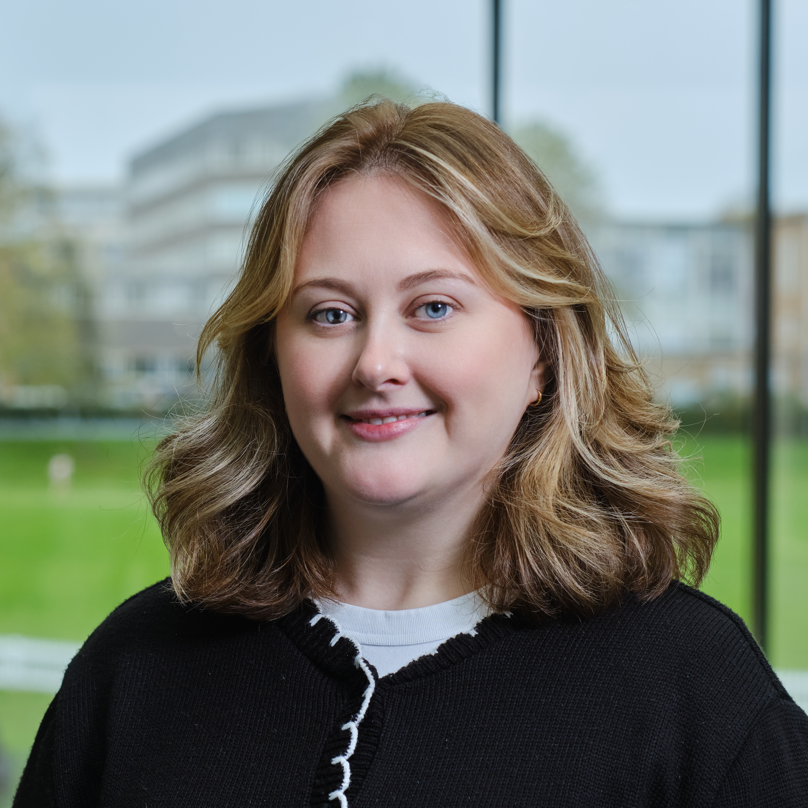
Lucy Wolstenholme
Project Title: ‘Co-creating Flood-Resilient Green Spaces: Understanding Health, Access and Equity in Leicestershire Communities’
Studying at: Loughborough University
Hello, I'm Lucy. I'm originally from Darlington and currently based in Loughborough, where I've worked at the University for the last three years. My route to research has been somewhat unconventional, spanning early years practice, children's nursing, and research support within higher education. Across these different roles, a common thread has always been a desire to care for others and contribute to something bigger than myself.
My experiences in health and care, as well as those rooted in my own lived experience, have shaped my interest in the wider determinants that influence health and wellbeing, while exposure to physical geography and flood research has long had me considering the social and environmental challenges that flooding poses to people and their health. During an MPhil at Loughborough University, I explored flooding as a determinant of health, focussing on its impacts on vulnerable populations and child wellbeing in Kenya, and considered the role of responsive caregiving in protecting children from long-term health and developmental impacts during post-flood recovery.
My PhD project brings together these interests at the intersection of public health and geography. Working with communities across Leicestershire, I will explore how flooding affects access to green spaces and what this means for health, wellbeing, and equity. Through a co-creation approach, I aim to support the development of climate- and flood-resilient green spaces that are accessible, inclusive, and beneficial for both current and future generations.
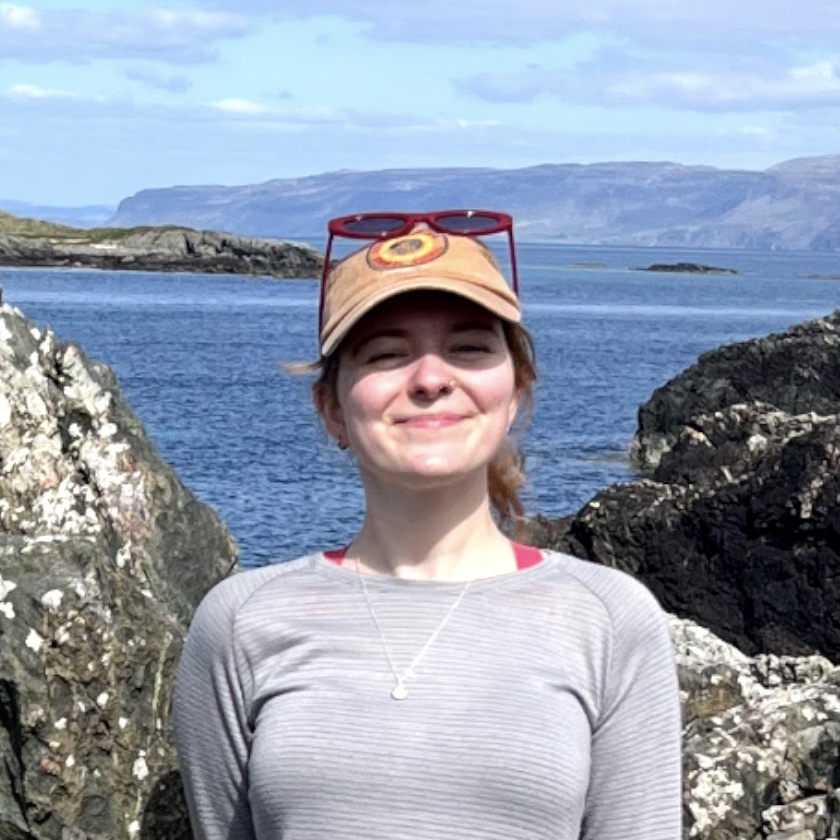
Gwen Armstrong-Bisson
Project Title: ‘Community flood management action: an urban v rural comparative study’
Studying at: Newcastle University
'Having grown up in York, flooding was an issue I became more than familiar with in my early years. This, and a passion for earth science guided me into a BSc in Geology (with attainment in Climate Change and Sustainability) at Keele University (2022-2025). In my 3rd year, I underwent a Hydrology and Engineering Geology module which inspired me to pursue hydrology to further studies. This led me to a MSc in Hydrology and Water Management at Newcastle University (2025-2026) which nurtured my passion for flood mitigation and resource management.
My MSc dissertation discussed the influences of land coverage change on the downstream catchment of the Tyne. This research piqued my interest in the influence of community engagement and land coverage on the catchment and how this differs in urban and rural areas. I am beyond grateful and excited for the opportunity the FLOOD-CDT has given me to pursue my passion for research in flood mitigation and water management, and the chance it provides me to make a tangible change in the field I am so enthused about.
When I am not working on my project, I can be found hiking, reading (and reviewing) books and oil painting.
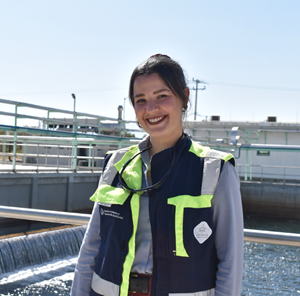
Alejandra Ayo
Project Title: ‘Assessing the Eco-hydrological and Geomorphic Effects of Floodplain Restoration’
Studying at: Newcastle University
Alejandra Ayo is a civil engineer and water management professional from Mexico, currently pursuing a PhD at Newcastle University through the NERC Resilient Flood Futures Centre for Doctoral Training.
She holds an MSc in Water and Environmental Management from the University of Bristol and a Master's degree in Hydraulic Engineering. Before beginning her PhD, Alejandra worked in the public sector in Jalisco, Mexico, where she contributed to regional water management strategies, river restoration initiatives and climate resilience programmes, bridging engineering, environmental science and public policy.
Her doctoral research focuses on assessing the eco-hydrological and geomorphic effects of floodplain restoration in the Upper River Dee catchment in Scotland. Through field monitoring, spatial analysis and hydrological modelling, she aims to understand how restoration influences floodplain processes, ecological conditions and resilience to environmental change.
Alejandra is particularly interested in interdisciplinary approaches that connect scientific research with practical solutions for sustainable water management and ecosystem restoration.